
The World's First Webcam Watched a Coffee Pot
The first webcam was not pointed at a celebrity or a skyline. It watched a pot of coffee in a Cambridge corridor, so researchers would not trek over to find it empty. The gloriously lazy birth of the live internet.
The world's first webcam was not pointed at a celebrity, a city skyline or a baby's cot. It was pointed at a coffee pot. For most of the 1990s, a camera in a corridor at the University of Cambridge broadcast a grainy live image of a single jug of filter coffee to the entire planet, and in doing so quietly invented a medium. It is the perfect origin story, because it was born not from ambition but from laziness.
A very British problem
In late 1991, a group of around fifteen researchers in the Computer Laboratory shared a single coffee machine, which sat in a corridor outside a room known as the Trojan Room. The lab was spread across the building, and there are few disappointments more acute to a tired researcher than trekking to the coffee pot only to find it empty. Someone with a closer desk had got there first and drained the last cup.
The fix that became the first webcam
Two of them, Quentin Stafford-Fraser and Paul Jardetzky, decided to solve this with engineering. They pointed a camera at the pot, wired it through a frame-grabber into a spare computer, and wrote a small program that served a fresh image a few times a minute. Now anyone in the building could pull up a tiny live picture of the pot on their screen and see, without leaving their chair, whether it was worth the walk. It was an internal convenience, a hack between colleagues, and nobody thought of it as historic.
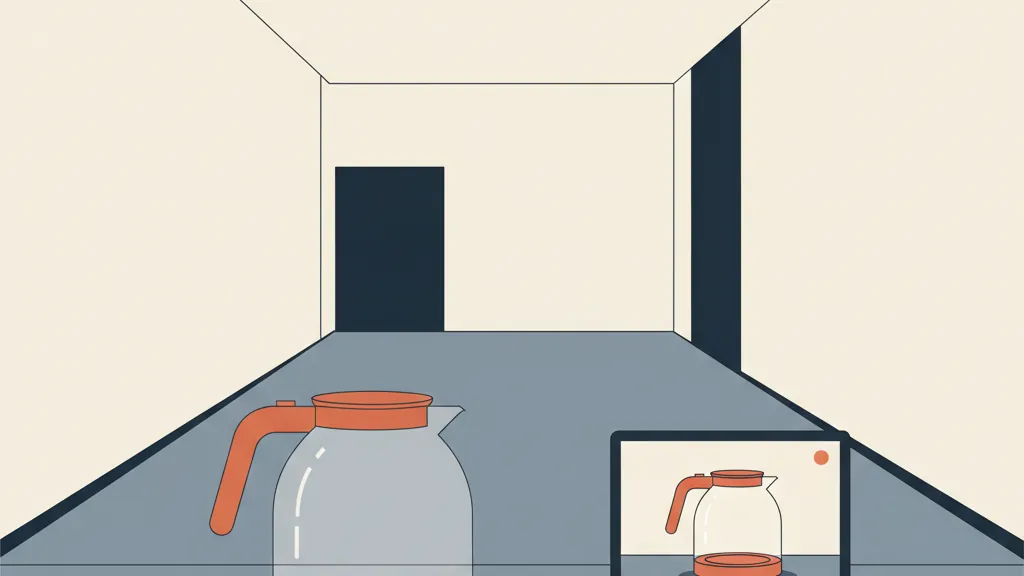
The pot the world watched
The leap came in 1993. When web browsers gained the ability to show images that spring, it became obvious that the picture could be served to anyone, not just the lab. Late that year the feed was connected to the web, and the Trojan Room coffee pot became a genuine global curiosity. People all over the world, most of whom would never drink from it, tuned in to watch a pot of coffee slowly empty and fill in a building in England. It was one of the first things that made the web feel alive, a real window onto a real, if utterly trivial, place.

Switched off, and auctioned
The camera ran for years, long after it had stopped being useful, kept alive because it had become a landmark. It was finally switched off in August 2001, its grainy black-and-white image fading out for good. The coffee pot itself, a humble German-made jug, was put up for auction online and sold for over three thousand pounds to a German news website, which restored it. A retired kitchen appliance had become a museum piece.
Why the coffee pot matters
The first webcam was not surveillance, and it was not vanity. It was a small group of people solving an ordinary annoyance, and accidentally inventing the live, always-on internet that we now take for granted. Every status page, every livestream, every sensor quietly reporting whether a thing is up or down descends from that pot. The instinct to put a camera on something just so you can check it from your desk is now woven through the whole of computing, including our own video hub and the status checks behind every data centre. The best inventions often start exactly this small, in the long history of how the web grew up, and you can still poke at the machinery behind any live site with our who is hosting this site tool.


0 Comments
No comments yet
Be the first to share your thoughts on this article.