
How Tiny Islands Got Rich From Two Letters
Tuvalu owns .tv, Anguilla owns .ai, and an accident of the alphabet has funnelled tens of millions of dollars to some of the smallest places on earth. The strange economics of country-code domains.
When the internet was being mapped onto the world in the 1980s, someone made a quiet decision with enormous accidental consequences. Every country would get a two-letter code for its own corner of the web, drawn from an existing list called ISO 3166. Tuvalu got tv. Anguilla got ai. The British Indian Ocean Territory got io. None of those letters were chosen for what they would later mean to the technology industry, and that accident has since funnelled tens of millions of dollars to some of the smallest places on earth.
How a country ends up owning a fortune in letters
Every country-code top-level domain, or ccTLD, belongs to the territory it represents. Usually that is dull and local, a .fr here, a .de there. But every so often a country's two letters happen to spell something the wider world desperately wants, and the territory finds itself sitting on a digital goldmine it did nothing to create. You can see the whole alphabet of them in our directory of domain extensions. A few of those entries are worth a great deal more than the others.
Tuvalu and the streaming jackpot: .tv
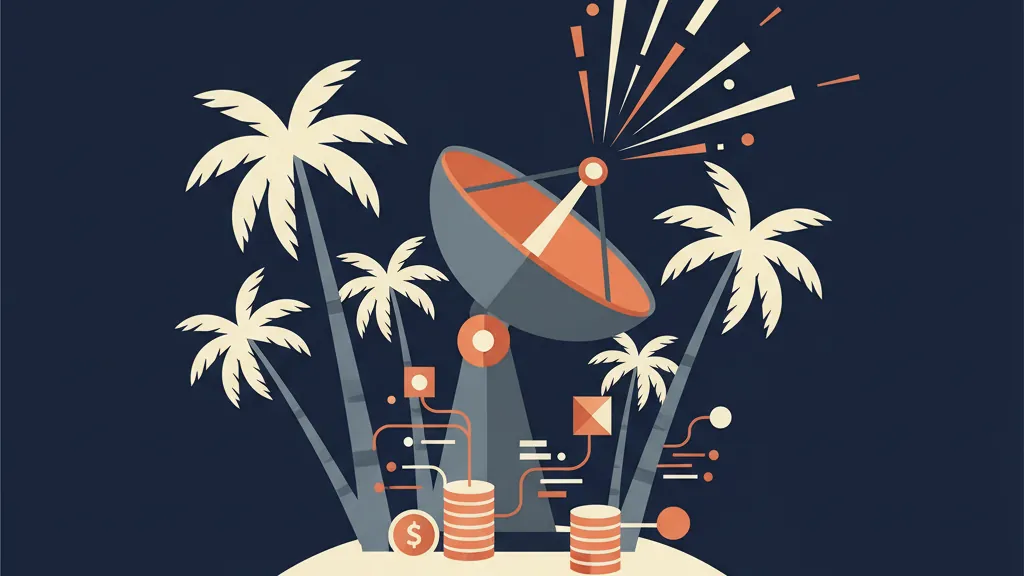
Tuvalu is a nation of about eleven thousand people on a scatter of low-lying Pacific atolls, more often in the news for being threatened by rising seas than for technology. Yet it owns .tv, the most television-shaped two letters on the internet, and that has changed its national finances. Early deals with Verisign paid Tuvalu in the region of five million dollars a year. In 2021 the contract moved to GoDaddy and the figure roughly doubled to around ten million dollars annually, which is a striking share of a tiny government's budget and a meaningful slice of the entire country's economic output. A climate-threatened nation, in part, funded by the rise of streaming.
Anguilla and the AI windfall: .ai
The most dramatic story is the most recent. Anguilla, a Caribbean island of around sixteen thousand people, happens to own .ai. For decades that was a sleepy registry, overseen since 1995 by an American expatriate named Vince Cate. Then, in November 2022, ChatGPT arrived, and suddenly every company on earth wanted two letters that said artificial intelligence. Registrations leapt from roughly 144,000 in 2022 to about 354,000 in 2023. The money followed. The domain brought in around thirty two million dollars in 2023, more than a fifth of the government's total revenue, and close to thirty nine million in 2024, approaching a quarter of everything the government took in. An island better known for hurricanes is now pouring domain money into infrastructure and disaster resilience, all because its letters caught the biggest technology wave of the decade.
The uncomfortable one: .io
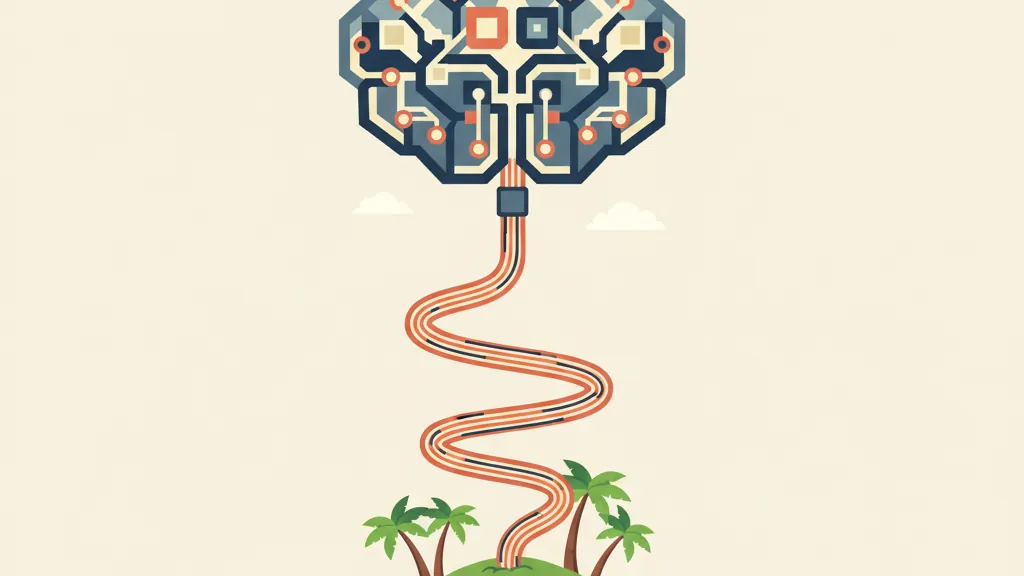
Not every story is so cheerful. The .io domain, beloved by startups and developers, belongs to the British Indian Ocean Territory, a name that hides a painful history. In the 1960s and 1970s the islands' inhabitants, the Chagossians, were forcibly removed to make way for a military base on Diego Garcia. The territory exists as a unit of administration over a place its own people were expelled from, and the tech industry has spent years building on its letters without noticing.
That history is now colliding with the present. In October 2024 the United Kingdom agreed to hand sovereignty of the Chagos Archipelago to Mauritius, with a treaty following in 2025. On paper, when a territory ceases to exist, its two-letter code can be retired, which would start a multi-year countdown for the more than a million and a half sites that rely on .io. In practice, the domain is now so valuable that everyone involved has a strong incentive to keep it alive, and most observers expect it to survive in some negotiated form. It is a reminder that a domain ending is not just a product. It is a small piece of a country's sovereignty, with all the history that carries.
The rest of the alphabet
The pattern repeats quietly across the map. Montenegro lends its .me to personal sites, Colombia's .co became a global startup favourite, Libya's .ly powers countless link shorteners, and the tiny territory of Tokelau once hosted more domains than almost anyone by giving .tk away for free. Each is an accident of the alphabet turned into a line in a national budget. Behind every one sits a registry and a chain of registrars selling those letters to the world.
Why it matters when you pick a domain
For most site owners this is trivia, but useful trivia. A ccTLD comes with a country attached, and that country can change the rules, the price or the politics of your address. The fun ones, .ai and .io and .tv, are fun precisely because the world reads them as words rather than countries, but they remain national assets that answer to a government somewhere. It is worth knowing whose letters you are renting. If you are choosing where a project should live as much as what it should be called, it pays to think about geography on the hosting side too, which is why we let you browse hosting by country alongside the full list of domain extensions.


0 Comments
No comments yet
Be the first to share your thoughts on this article.