
Eternal September: The Day the Internet Culture Died
Ask a certain old-timer and they will tell you, straight-faced, that it has been September 1993 for over thirty years. The story of what happens to a community when it scales past the point its culture can survive.
There is a date that, on the internet, never ended. Ask a certain kind of old-timer and they will tell you, with a straight face, that it has been September 1993 for more than thirty years. They are joking, and they are also completely serious. The story of Eternal September is the story of what happens to a community when it scales past the point where its own culture can survive.
The rhythm of the old internet
Before the web, much of internet conversation happened on Usenet, a sprawling network of discussion groups. It had its own dense etiquette, built up over years: how to quote a reply, what counted as off-topic, how not to embarrass yourself. Every September, a wave of new university students arrived online for the first time, blundered cheerfully through all of it, and were gently corrected by the regulars. Within a few weeks the newcomers had absorbed the norms and become regulars themselves. The community digested each annual intake and carried on. It was predictable, almost seasonal.
The September that never stopped
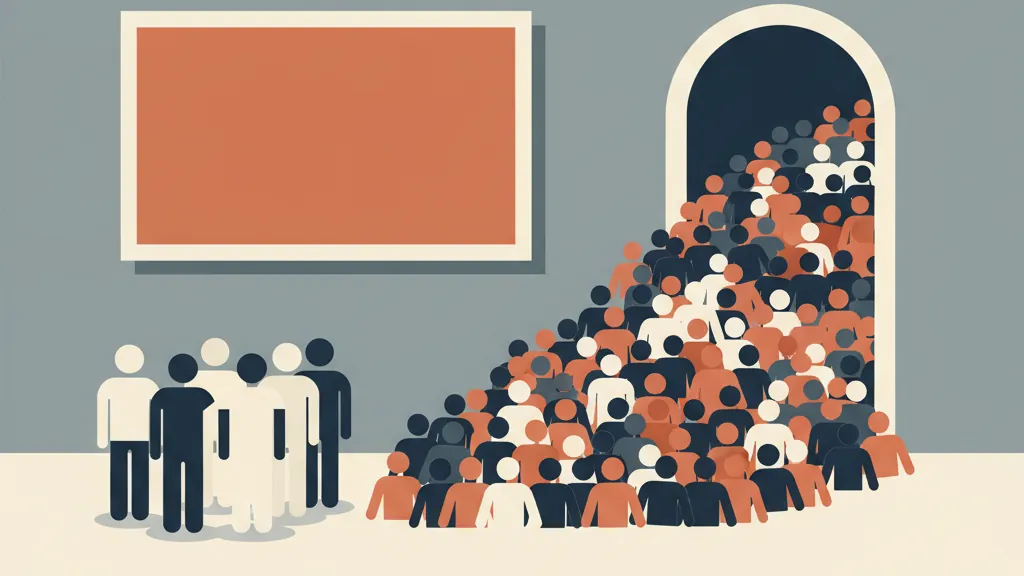
In 1993, one of the large commercial online services opened the floodgates and gave its enormous membership access to Usenet. This time the wave did not crest and recede. It just kept coming, month after month, far faster than the existing culture could teach its manners to the arrivals. The careful process of socialising newcomers broke down, because the newcomers never stopped being the majority. The regulars watched their shared customs dissolve under sheer numbers. Someone gave the phenomenon its perfect name: the September that never ended, or Eternal September.

Why the joke keeps being true
Eternal September endures as a phrase because the pattern keeps repeating. Every online community that grows fast enough lives through its own version: a small place with strong shared norms suddenly swamped by people who never learned them, and a older guard mourning a culture that scaled itself to death. It is the fundamental tension of every open platform, the trade-off between letting everyone in and keeping the thing that made it worth joining. The bulletin boards felt it, the forums that followed felt it, and the give-and-take communities behind Post2Host hosting felt it too.
The lesson is not that openness is bad. It is that culture is fragile, and that it propagates person to person at human speed, which means it can be overwhelmed by growth that moves faster. Anyone who has ever run a community forum knows the feeling in their bones. It is worth remembering, every time a quiet corner of the internet you love suddenly gets popular, that you may be living through another September that will not end. The wider story of how these spaces grew sits in our look at the history of web hosting.


0 Comments
No comments yet
Be the first to share your thoughts on this article.