
The Great Domain Gold Rush of the 1990s
For a few wild years a handful of letters and a dot could be worth more than a house, and the companies whose names were on the line mostly slept through the start of it. The 1990s domain name gold rush.
For a few wild years in the 1990s, a handful of letters and a dot could be worth more than a house, and almost nobody saw it coming. Domain names, the human-friendly addresses of the web, went from a free technical formality that a few institutions bothered with to one of the great speculative gold rushes of the decade. The companies whose names were on the line mostly slept through the start of it.
The first claim on an empty frontier
The very first .com domain was registered on 15 March 1985 by a computer company called Symbolics. There was no shopping cart and no fee. You simply sent a request to the small team that kept the master list, and a name was yours. In the whole of that first year, only a tiny handful of .com names were registered. The frontier was wide open, and hardly anyone had noticed it existed.

The day the names stopped being free
For a decade, registering a domain remained free, handled in the cooperative, trust-based spirit of the early internet. That ended in 1995, when the company responsible for registrations, Network Solutions, began charging for the privilege, famously around one hundred dollars for a two-year registration. There was grumbling about a public resource being turned into a toll road, but the effect was electric. Once a name had a price, it had a value, and the land grab began in earnest.
The prank that woke everyone up
The moment the wider world realised what was happening came courtesy of a journalist. In 1994, writing for Wired, Joshua Quittner discovered that enormous companies had simply failed to register their own names, so he registered mcdonalds.com himself and wrote a now-famous article about it. He eventually handed the address over to the fast-food giant, but not before extracting a wonderfully fitting ransom: a donation of a few thousand dollars to wire a Brooklyn school for the internet. The message to corporate America could not have been clearer. Your name is sitting there unclaimed, and someone else can take it.
From formality to fortune
After that, the rush was on. Speculators registered every common word, every business term and every brand they could think of, betting that someone would one day pay to buy them back. Some bets paid off spectacularly. The address business.com changed hands in 1999 for seven and a half million dollars, an almost unimaginable sum for what was, at bottom, a string of characters. Others descended into farce and litigation, with valuable names stolen, fought over in court and sold again. A formality had become a frontier, with all the opportunism and lawlessness that word implies.
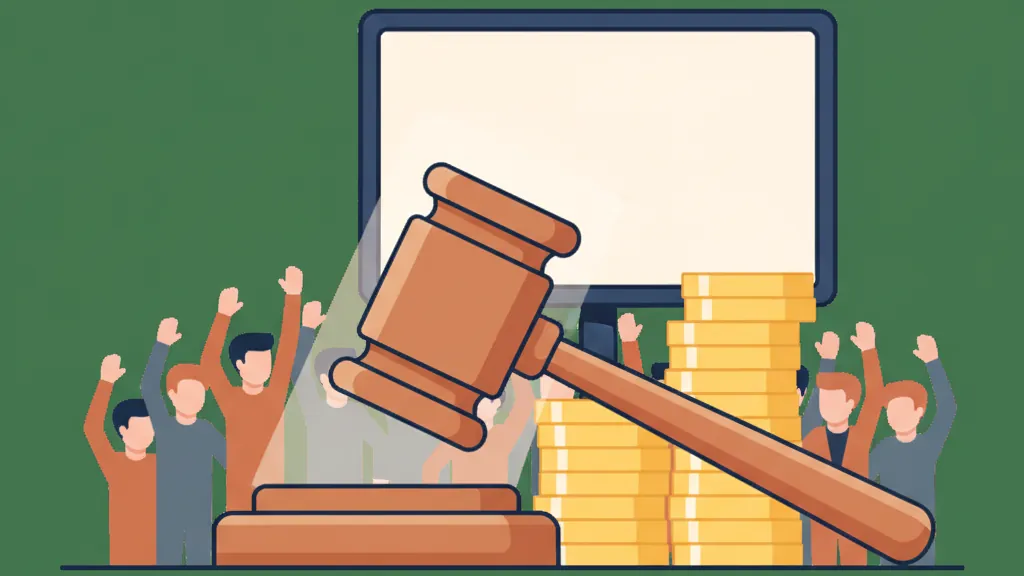
The sheriff arrives
Lawless frontiers eventually get rules. As the chaos mounted, oversight of the domain system passed to a new coordinating body, ICANN, in 1998, and a year later new laws and dispute procedures arrived to deal with the practice of registering someone else's trademark in bad faith. The pure free-for-all was over. Buying a domain became the orderly, few-dollars-a-year transaction most people know today, handled by a competitive market of registrars rather than a single gatekeeper.
The gold rush cooled, but the underlying truth it revealed never went away: a good name is genuinely valuable, and the supply of short, memorable ones is finite. That is exactly why some country endings later became unexpected fortunes of their own, the story we tell in how tiny islands got rich from two letters. You can still wander the whole map of possibilities in our directory of domain extensions, look up who owns a name with the who is hosting this site tool, and when you are ready to put something at that address, the hosting directory is the next step.


0 Comments
No comments yet
Be the first to share your thoughts on this article.