
Chatbot Infrastructure Security Under Strain as AI Reconnaissance Tooling Evolves
AI chatbots rely on complex infrastructure that faces new security pressures from reconnaissance tools, supply-chain breaches, and firewalls under siege.
OpenAI expanded its Daybreak security initiative with a full release of GPT-5.5-Cyber on June 23, giving defenders a specialized model to patch flaws in software and infrastructure that supports AI chatbots. The move comes as attackers increasingly target the underlying systems that feed, host, and secure conversational AI models.
According to the OpenAI announcement, GPT-5.5-Cyber was trained on vulnerability data and exploit chains to help security teams automatically generate patches. The model is part of a broader push that began with Daybreak's launch in early 2026, when OpenAI offered early access to a smaller cyber-focused model. The expanded version now includes tooling for code analysis and network defense, steps aimed at protecting the infrastructure that chatbot services rely on for real-time inference and data retrieval.
Infrastructure reconnaissance becomes a missing layer
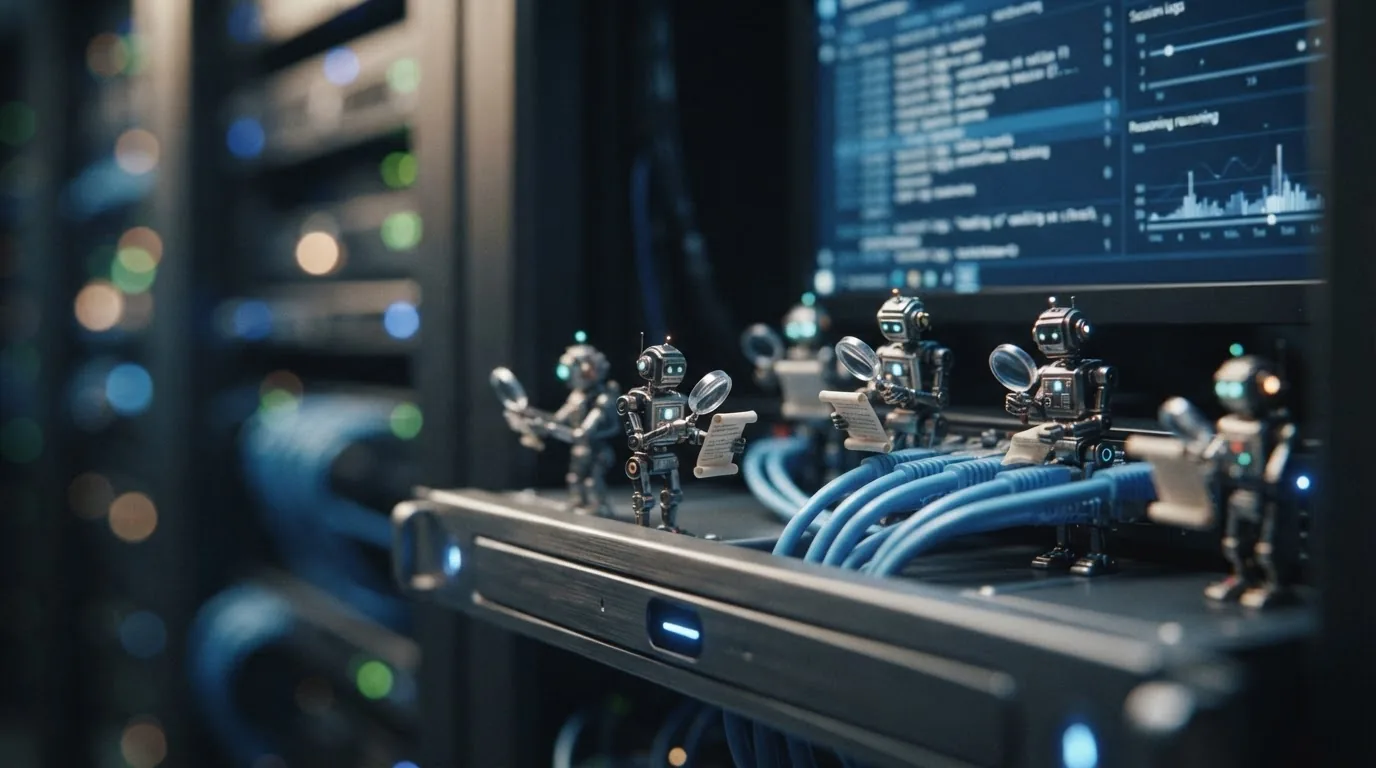
A separate analysis published by Akamai's Linode blog on June 24 identifies AI reconnaissance as a blind spot in chatbot security. Attackers are not only trying to inject malicious prompts, they are also probing the cloud instances, database endpoints, and load balancers that chatbots use. The post warns that automated reconnaissance scripts can map an AI application's backend infrastructure in minutes, revealing exposed APIs or misconfigured storage buckets. Linode recommends that organizations running chatbots treat network-level discovery as a first-class threat and apply strict ingress filtering, API gateways, and subnet isolation.
- OpenAI's GPT-5.5-Cyber generates patches from vulnerability descriptions and exploit examples, aiming to reduce manual triage time.
- Akamai's research notes that many chatbot deployments rely on open-source frameworks hosted on cloud VMs, which can be mapped by off-the-shelf scanning tools.
- The FortiBleed campaign, detailed by ZenoX and CloudSEK on June 23, used automated credential harvesting against FortiGate firewalls, a common perimeter device for chatbot hosting environments.
- LastPass revealed on June 24 that attackers accessed customer data through a Salesforce OAuth token stolen in the Klue supply chain incident, illustrating how third-party integrations can expose AI service backends.
Campaigns targeting firewall and access layers
The FortiBleed campaign, analyzed by ZenoX and CloudSEK, exposed a sophisticated pipeline that compromised FortiGate devices by exploiting known CVEs and then deploying credential stealers. Researchers found an exposed server containing tools, scripts, and harvested credentials that gave insight into the operation. In some cases, attackers achieved full domain controller access, which could allow them to intercept or redirect traffic to AI chatbot endpoints hosted behind those firewalls. The campaign highlights how infrastructure that supports AI deployments faces the same class of automated attacks targeting enterprise networks.
LastPass confirmed on June 24 that a supply chain breach through Klue enabled attackers to steal OAuth tokens and access customer data in Salesforce. For organizations that use LastPass or Salesforce to manage credentials or customer records tied to AI chatbots, the incident shows that access token hygiene is a critical control point. Security teams are now reviewing third-party integrations and OAuth scope restrictions in response.
AI chatbot providers and their infrastructure partners are expected to adopt more granular network monitoring and supply chain audits in the coming quarters. The combination of specialized AI defense tools and operational hardening of cloud and firewall layers may define the next phase of chatbot security strategy.
Fact check
-
OpenAI expanded Daybreak with a full release of GPT-5.5-Cyber on June 23.
reported · source
-
Akamai's Linode blog identified AI reconnaissance as a blind spot in chatbot security on June 24.
reported · source
-
The FortiBleed campaign used automated credential harvesting against FortiGate firewalls and achieved full domain controller access in some cases.
reported · source
-
LastPass confirmed a data breach after attackers stole OAuth tokens in the Klue supply chain attack on June 24.
reported · source
Source reporting (9)
- Linode blog · AI Reconnaissance: The Missing Layer in Chatbot Security
- Infosecurity Magazine · OpenAI Expands Daybreak to Help Defenders Patch Flaws
- Help Net Security · What the Fortibleed campaign means for organizations running FortiGate firewalls
- BleepingComputer · LastPass confirms data breach in Klue supply chain attack
- Dark Reading · SocGholish Takedown Highlights Malicious TDS Threats
- TechSpot · Cloudflare teams up with Chrome, Edge, and Firefox to tackle bot traffic without CAPTCHAs
- The Next Web · The cybersecurity industry built a $200B business selling you problems. Nobody got paid to fix them.
- BleepingComputer · The Exploit Doesn't Exist. You Can Still Prove It Works Against You
- Hacker News Front Page · Spying on kids to save kids from spying is stupid


0 Comments
No comments yet
Be the first to share your thoughts on this article.