
Bond-Villain Data Centres: Servers in Bunkers, Silos and the Sea
Most data centres are deliberately boring grey sheds. A few sit inside nuclear bunkers, missile silos, mountains and on the sea floor, and look like the lair of a film villain. The theatrics are mostly practical.
Most data centres are deliberately boring: anonymous grey sheds on the edge of town, designed to attract no attention at all. A handful are the opposite. They sit inside nuclear bunkers, Cold War missile silos, mountains and even on the floor of the sea, and they look less like infrastructure than the lair of a film villain plotting to hold the world to ransom. The strange thing is that the theatrics are mostly practical.
The bunker under Stockholm
The most famous example sits about thirty metres beneath a park in Stockholm. Pionen, run by the Swedish provider Bahnhof, was built inside a former civil-defence nuclear shelter blasted out of solid granite. When it was redesigned in the late 2000s, the architects leaned all the way into the science-fiction feel: glass-walled meeting rooms suspended over the server floor, simulated daylight, greenhouses, indoor waterfalls, and backup generators salvaged from submarines. It became briefly notorious as a host for WikiLeaks, and it remains the picture people reach for when they imagine a Bond-villain server room, because it genuinely looks like one.
Servers down a missile silo
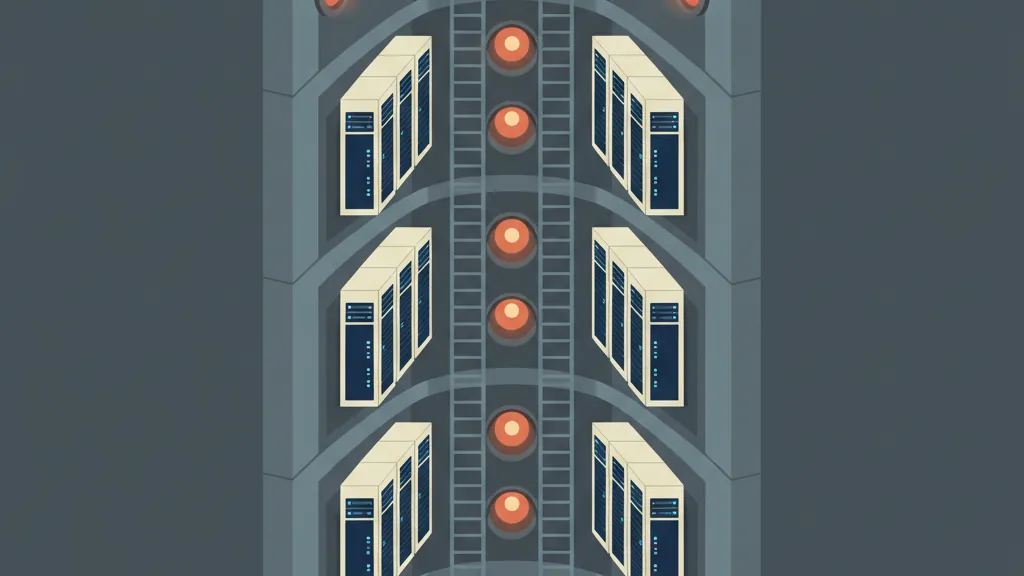
Pionen is not alone. Around the world, decommissioned Cold War missile silos and military bunkers have been reborn as data centres, their metres-thick concrete and remote locations turning out to be ideal for people who want their servers physically unreachable. The same instinct that once protected warheads now protects dedicated servers. Old limestone mines and deep caverns do similar duty, offering natural cooling, total physical security and protection from almost anything happening on the surface.
Microsoft sank a data centre in the sea
The strangest experiment of all went the other way, down rather than in. In 2018 Microsoft, as part of a project called Natick, sealed a cylinder full of servers and sank it onto the seabed off the coast of Orkney in Scotland, powered by renewable energy. When the capsule was hauled back up two years later, the result was surprising: the underwater servers had failed far less often than identical machines on land, roughly a fraction of the rate. The cool, stable water and the sealed, oxygen-free atmosphere inside the capsule had simply been kinder to the hardware than a normal room full of air and people.

Why go to such lengths
Strip away the drama and the motives are sober. Underground sites are easy to keep cool and almost impossible to break into. Bunkers shrug off fire, flood, storms and intruders. Remote locations near cold water or cheap renewable power cut the single largest running cost, which is keeping thousands of machines from overheating. The aesthetics are a bonus; the engineering is the point. These places are extreme answers to the same questions every ordinary facility faces, which you can explore across our data centre directory and the map of cloud regions that quietly power most of the web.
There is a useful counterpoint hiding in here too. The OVH fire was a reminder that a data centre is a physical building that can burn. The bunker builders took that lesson to its logical extreme and put the building somewhere almost nothing can touch it. For the rest of us the practical takeaway is gentler: the box your site lives in is a real place in the real world, with all the risks that implies, so it is worth knowing where it is. Our directory is a good place to start looking.


0 Comments
No comments yet
Be the first to share your thoughts on this article.