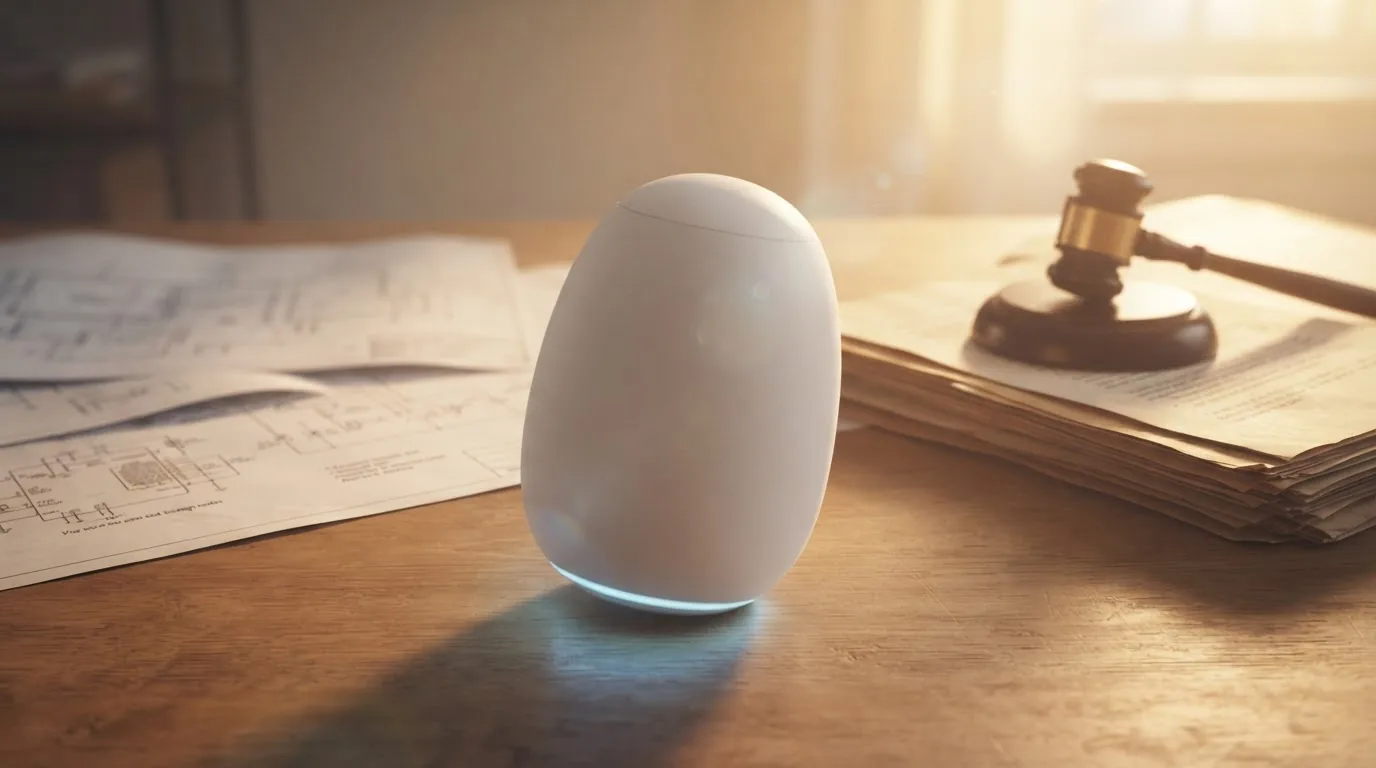
OpenAI's first hardware device is a screenless, moving smart speaker with camera, sensors
OpenAI's first hardware device is reportedly a screenless smart speaker that can move and uses a camera and sensors to understand its environment. The device aims to be a humanlike AI companion, but Apple has sued OpenAI for alleged trade secret theft.
OpenAI is developing its first consumer hardware device: a screenless, mobile smart speaker with a camera and sensors that can physically move, according to a Bloomberg report published Tuesday. The device is designed to function as a humanlike AI companion that integrates with ChatGPT and learns a user's habits over time.
Bloomberg reported that the device, still in development, includes mechanical elements that allow it to move on its own. It will have access to a user's digital life, drawing from emails and other data to provide personalized service. The report comes just days after Apple filed a lawsuit against OpenAI, accusing the AI company of stealing trade secrets related to hardware development.
Device details and Apple lawsuit
The screen-free speaker is being pitched internally as a "humanlike AI companion that lives in the home," according to Bloomberg's sources. It will use a camera and additional sensors to "understand" its environment. The device was developed with help from former Apple engineers who worked on the iPhone and Mac, the report said.
- No screen: The device relies entirely on voice and camera interaction, distinguishing it from Amazon Echo Show or Google Nest Hub.
- Proactive learning: The device will learn about its owner over time, offering personalized responses and actions.
- Apple's lawsuit: Filed July 7, 2026, Apple claims OpenAI misappropriated trade secrets related to hardware design. OpenAI denies wrongdoing and says its product "veers significantly from anything Apple has on the market today."
- Former Apple talent: Multiple ex-Apple engineers who worked on iconic devices are involved in the project.
AI hardware race heats up
OpenAI's hardware push signals growing ambition in consumer AI devices. Competitor Hark, led by Brett Adcock, raised a $700 million Series A in May at a $6 billion valuation to build its own "personal intelligence" hardware. The category remains nascent but is attracting significant capital. Bloomberg reported that OpenAI may announce the device later this year, though the company has not confirmed a timeline. The lawsuit with Apple could complicate launch plans, but OpenAI maintains its design is distinct. The device represents OpenAI's bet that voice-first, camera-aware AI hardware will carve a new product category beyond smartphones and existing smart speakers.
Fact check
-
OpenAI's first hardware device is a screenless, mobile smart speaker with a camera and sensors.
reported · source
-
The device includes mechanical elements that allow it to move on its own.
reported · source
-
Apple filed a lawsuit against OpenAI for alleged trade secret theft on July 7, 2026.
reported · source
-
Former Apple engineers who worked on the iPhone and Mac helped develop the device.
reported · source
-
Hark raised a $700 million Series A in May 2026 at a $6 billion valuation.
reported · source
Source reporting (3)
- TechCrunch · OpenAI’s first hardware device is reportedly a screenless speaker that can move
- The Verge · OpenAI may announce a ChatGPT smart speaker this year
- Techmeme · Sources: OpenAI's first device will be a moveable, screen-free smart speaker with a camera and sensors, meant to serve as a humanlike AI companion (Mark Gurman/Bloomberg)


0 Comments
No comments yet
Be the first to share your thoughts on this article.