AWS Cuts ECS Auto Scaling Reaction Time by 76% with High-Resolution Metrics
Amazon ECS now supports high-resolution 20-second metrics for service auto scaling, cutting scale-out trigger time by 76% and total provisioning time by 72%, enabling lower baseline capacity and cost savings.
Amazon Web Services has released enhancements to its Elastic Container Service (ECS) auto scaling that cut scale-out detection and provisioning times by more than 70 percent. The update introduces high-resolution metrics collected every 20 seconds, along with metric publishing optimizations, and is available immediately in all AWS regions where ECS operates.
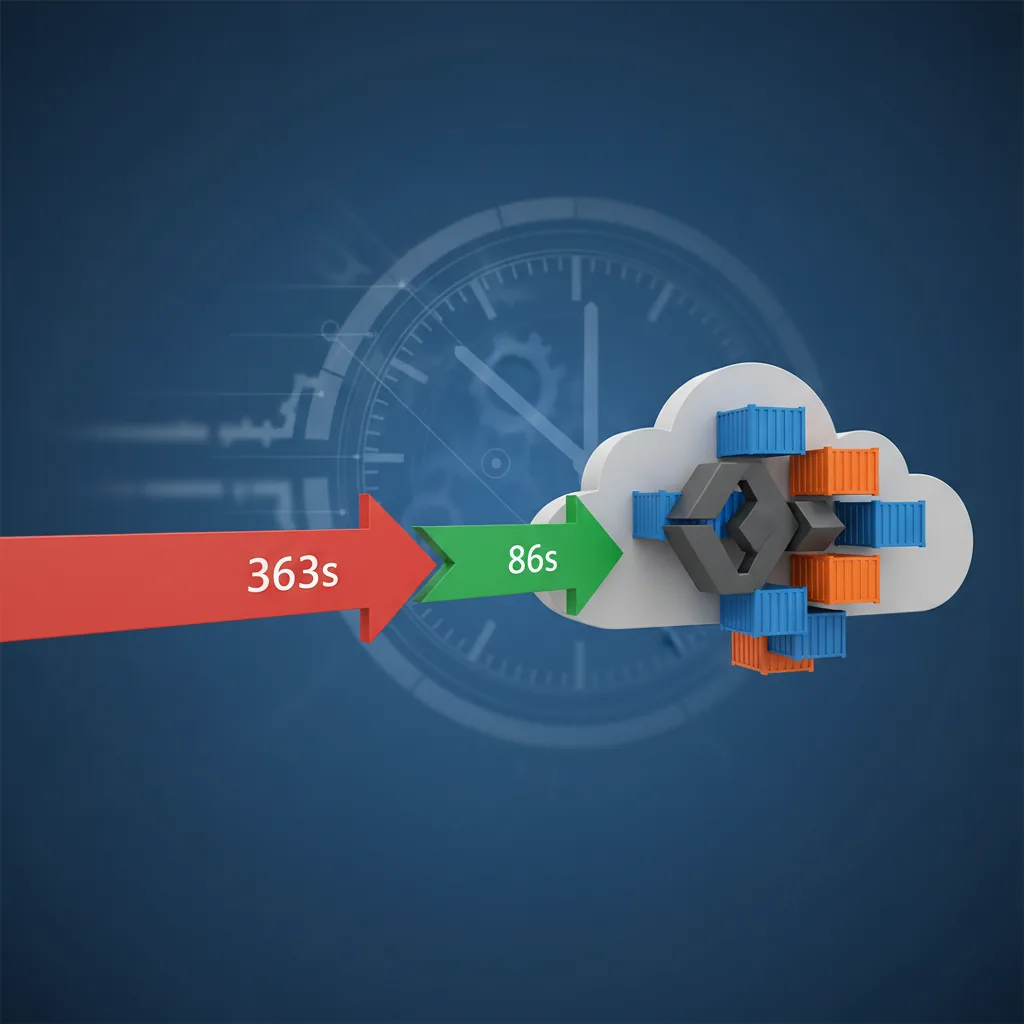
In benchmark tests run by AWS, the time to trigger a scale-out action dropped from 363 seconds to 86 seconds, a 76 percent improvement (4.2x faster). The total time to scale and provision new tasks fell from 386 seconds to 109 seconds, a 72 percent improvement (3.5x faster). These numbers reflect end to end latency from a load spike to the moment a new task is ready to serve traffic.
High-Resolution Metrics Enable Faster Response
The core change shifts ECS service auto scaling from a one-minute metric granularity to a 20-second granularity. Target tracking, predictive scaling, and scheduled scaling policies all benefit from the faster cadence. The optimizations also reduce the overhead of publishing metrics to CloudWatch, which AWS says further tightens the feedback loop.
Key details of the update:
- Metrics are now published at 20-second intervals, down from the previous 60-second default.
- Scale-out trigger time improved 76 percent (363s to 86s) in AWS benchmarks.
- Total provisioning time improved 72 percent (386s to 109s).
- All existing scaling policy types (target tracking, step scaling, scheduled scaling, predictive scaling) benefit automatically.
- No changes to pricing or configuration are required; the feature is enabled by default for new and existing services.
Implications for Cost and Capacity Planning
Faster auto scaling means operators can reduce baseline capacity without sacrificing reliability. Because the system detects and reacts to load changes more quickly, there is less need to over-provision buffers for sudden spikes. AWS has stated that the improvements directly enable lower compute costs while maintaining service performance as demand fluctuates.
For teams already using ECS with Application Auto Scaling, the change is transparent. No new APIs or workflow modifications are needed. The enhancements apply to both Fargate and EC2 launch types. Customers running latency-sensitive or variable workloads such as e-commerce checkout services, ad servers, or real-time data pipelines should see the most benefit.
AWS recommends that users review their existing scaling policies and adjust target values if they had previously tuned around the older, slower response times. The company also notes that predictive scaling, which uses machine learning to forecast traffic, now incorporates the higher-resolution data for more accurate predictions. As adoption spreads, the faster auto scaling is expected to become a standard expectation for containerized workloads on AWS.
Fact check
-
Scale-out trigger time improved from 363 seconds to 86 seconds (76% faster, 4.2x).
reported · source
-
Total time to scale and provision new tasks improved from 386 seconds to 109 seconds (72% faster, 3.5x).
reported · source
-
The update introduces high-resolution metrics collected every 20 seconds.
reported · source
-
The enhancements are available immediately in all AWS regions where ECS operates.
reported · source



0 Comments
No comments yet
Be the first to share your thoughts on this article.