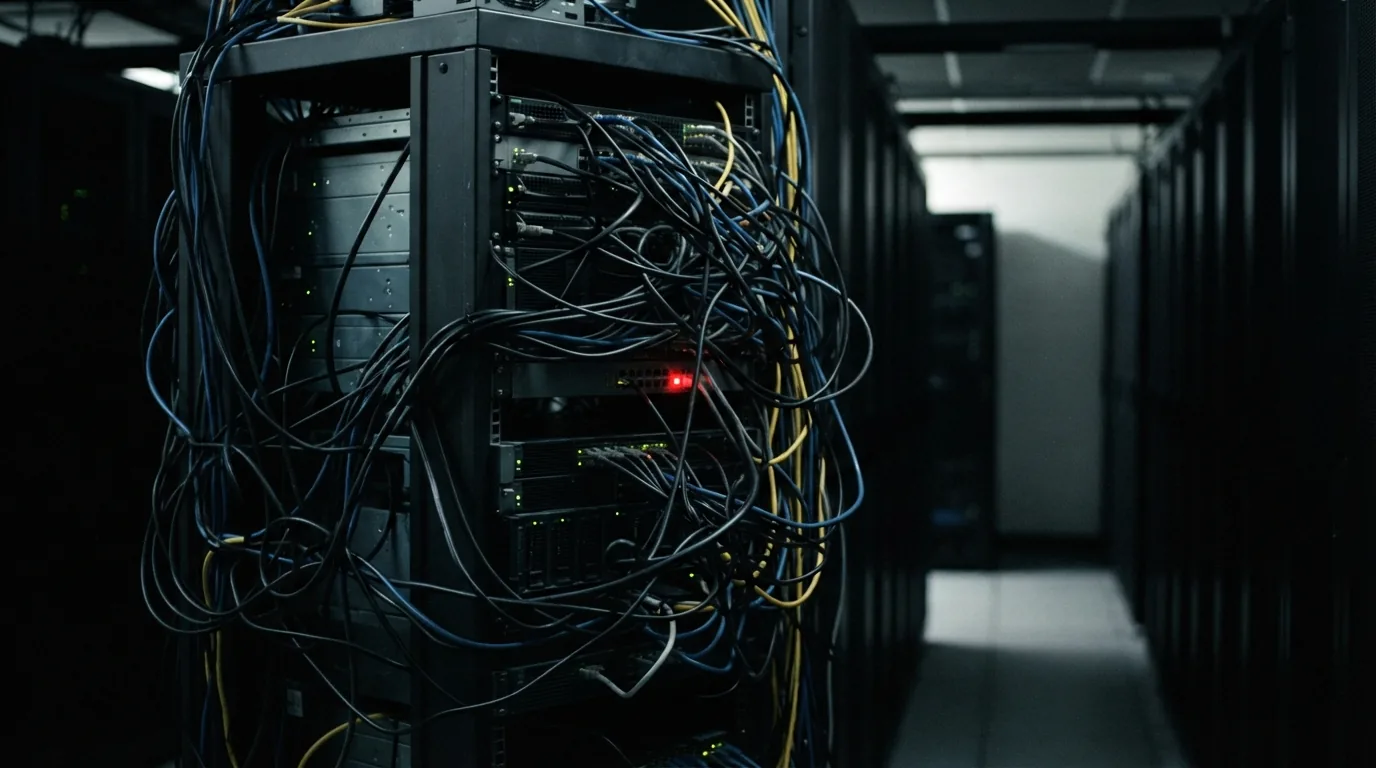
AI agent failures in production trace to missing infrastructure, not model quality
A Red Hat analysis and a token overhead study show that AI agents fail in production due to infrastructure gaps: 33k token overhead per request, no persistent memory, and no clear human accountability.
As enterprises rush to deploy AI agents in production, a growing number of incidents reveal that the infrastructure layer for these systems remains underdeveloped. A Red Hat analysis published in March 2025 describes a typical on-call scenario: an agent handling support tickets, billing adjustments, and customer questions fails with three unrelated alerts in a single morning. The agent had passed all staging tests.
One concrete measure of the overhead problem comes from a comparison of two coding agents. Claude Code sends 33,000 tokens before reading the user prompt, while OpenCode sends only 7,000 tokens, according to a study posted on Hacker News. That 4.7x difference in token overhead translates directly into higher API costs and slower response times.
Token overhead and operational costs
Token waste is not limited to coding agents. The Red Hat post notes that failures often stem from the agent's tool-calling layer, not the model itself. A single LangChain-powered agent can trigger cascading failures when its dependency graph becomes tangled. The New York Times, reported via Slashdot, points to a larger category of back-office workers: customer service reps, bookkeepers, payroll clerks, and HR specialists. These roles collectively account for tens of millions of jobs, and they are the ones most likely to be augmented or replaced by agents.
- Three unrelated failures from a single agent in one incident, as described in the Red Hat blog.
- Claude Code sends 33k tokens per request before reading the prompt; OpenCode sends 7k.
- Adaptive Recall offers persistent memory for AI assistants over the Model Context Protocol, addressing a key infrastructure gap.
- Simon Willison argues that agents should never be the Directly Responsible Individual for a project.
Accountability and memory gaps
The concept of Directly Responsible Individuals originated at Apple and is defined in the GitLab handbook as the person "ultimately accountable for the success or failure of a specific project." Simon Willison, writing in July 2026, argues that agents should not hold that role. "That's something that feels uniquely human to me," he writes. Persistent memory is another missing piece. Adaptive Recall, a startup offering memory over MCP, allows agents to retain context across sessions, reducing the need to re-send large amounts of context with every request.
What comes next is a push for better observability, cost controls, and clear ownership structures. The Red Hat analysis positions infrastructure as the missing layer that determines whether an agent succeeds or fails in production. Without it, teams will continue to spend weekends cleaning up incidents that have nothing to do with prompt engineering or model selection.
Fact check
-
A Red Hat analysis describes an agent that caused three unrelated failures in a single incident.
reported · source
-
Claude Code sends 33,000 tokens before reading the prompt, while OpenCode sends 7,000 tokens.
verified · source
-
Simon Willison argues that agents should not be the Directly Responsible Individual for a project.
reported · source
-
The New York Times, reported via Slashdot, states that back-office workers such as customer service reps and HR specialists collectively account for tens of millions of jobs.
reported · source
Source reporting (9)
- Red Hat Blog · Why good AI agents fail in production: The missing infrastructure layer
- Simon Willison · Directly Responsible Individuals (DRI)
- Slashdot · 'Forget Coders. The Real AI Threat Is In the Back Office'
- Hacker News Front Page · Show HN: Adaptive Recall, persistent memory for AI assistants over MCP
- Hacker News Front Page · Claude Code sends 33k tokens before reading the prompt; OpenCode sends 7k
- Hacker News Front Page · Migrating a production AI agent to GPT-5.6: 2.2x faster, 27% cheaper
- The New Stack · APIs aren’t dead. Here’s where MCP fits alongside them.
- The New Stack · Anthropic’s newest enterprise partner is training 20,000 people on Claude — here’s the shift it signals
- Hostinger Tutorials · Types of AI agents

0 Comments
No comments yet
Be the first to share your thoughts on this article.