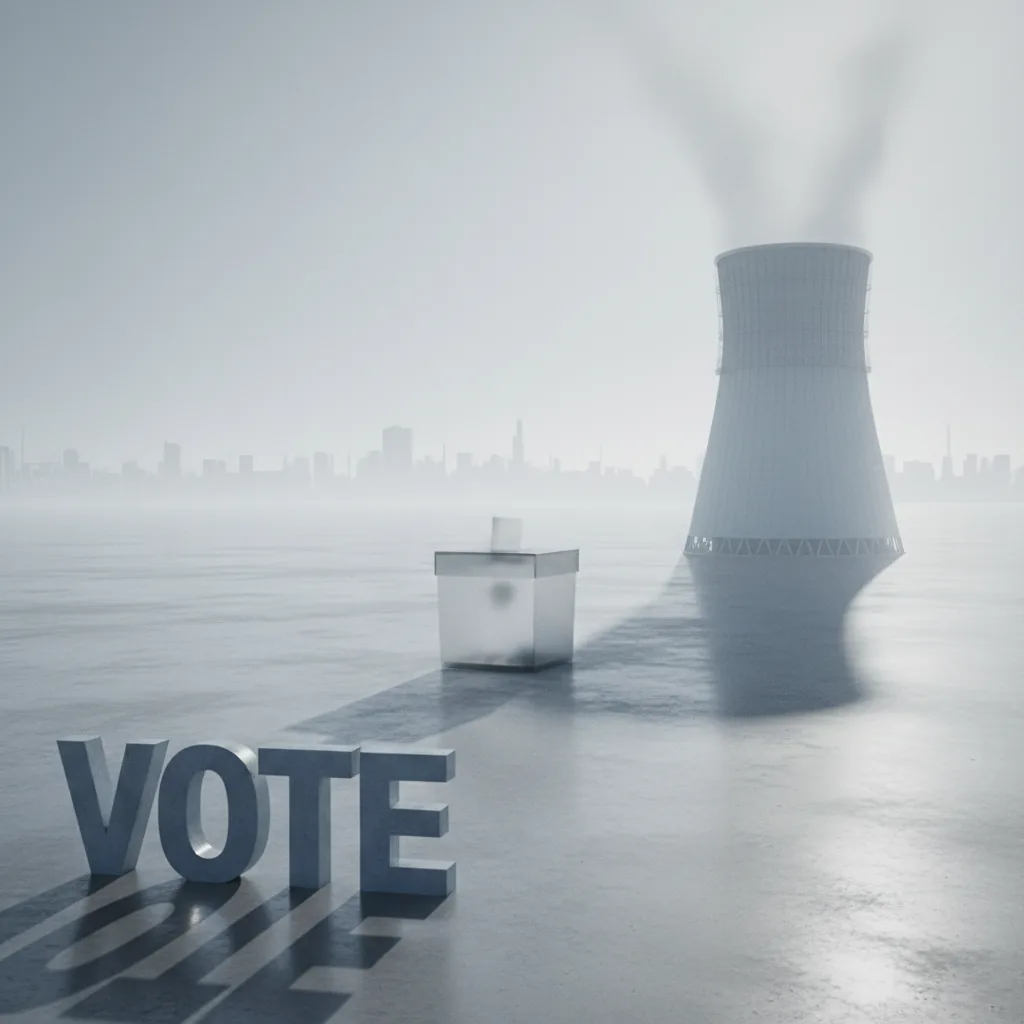
Voter Backlash Over Data Centers Reshapes U.S. Politics After Utah Primary Losses
Utah State Senate President J. Stuart Adams lost his primary after backing a 9 GW data center project. A new poll shows 57% of Americans oppose local data centers, signaling a growing political risk for pro-development officials.
Voter anger over massive data center projects is reshaping U.S. politics, with Utah State Senate President J. Stuart Adams losing his primary election on June 25 after backing a controversial development near the Great Salt Lake. The defeat of Adams, one of the most powerful Republicans in the state, signals that opposition to data centers is no longer confined to planning disputes but is emerging as a voting issue capable of reshaping elections.
A Reuters/Ipsos survey conducted in June found that 57 percent of Americans would oppose a data center being built in their community, with just 14 percent comfortable living near one. The poll underscores the depth of public skepticism as the AI boom drives demand for new facilities.
The Stratos Project and Its Political Fallout
The controversy in Utah centered on the Stratos project, a proposed data center campus in Box Elder County's Hansel Valley. Backed by Shark Tank investor Kevin O'Leary, the development would span tens of thousands of acres and require up to 9 gigawatts of power, more electricity than the entire state of Utah currently uses, according to The Guardian. O'Leary later told NBC News he would be willing to shrink the project.
Adams became a focal point for opposition after backing the development in his role leading a state authority that approved early plans. His challenger ran in part on opposing the project. At the county level, commissioners who voted to advance the project also lost their primaries. Former Box Elder County Commissioner Lee Perry said after conceding, 'Do I think that the data center vote cost me the election? Yes I do.'
- Stratos project planned for tens of thousands of acres in Box Elder County.
- Required up to 9 GW of power, exceeding Utah's total current usage.
- State Senate President Adams lost primary after supporting the project.
- Multiple county commissioners who voted for the project also lost their primaries.
- New Jersey has also enacted bans on data center development, according to Gizmodo.
Energy Prices and Voter Sentiment
Dan Cassino, a professor of government and politics at Fairleigh Dickinson University, said data centers have become a major issue in primary elections as affordability has become central to U.S. politics. 'Energy prices are the current face of affordability,' Cassino told Newsweek. He noted that the argument that AI data centers are eating electricity gives candidates a simple and compelling story, especially when voters are already skeptical of AI.
The politics of the issue do not fall neatly along partisan lines. Democrats face pressure from the left flank on environmental concerns, while Republicans who traditionally argue for reduced regulation now face voters who believe new development could affect them personally through higher energy prices. Cassino added, 'None of this would matter if voters liked what they were getting from the data centers, but they don't see the benefit.'
The backlash is likely to intensify as more data center projects come online. Candidates in upcoming elections may need to address energy consumption and local impacts directly. For the data center industry, the political landscape is shifting from welcoming to wary, with voter sentiment now a factor in site selection and project approval.
Fact check
-
Utah State Senate President J. Stuart Adams lost his primary election after supporting the Stratos data center project.
reported · source
-
The Stratos project would require up to 9 gigawatts of power, more than Utah's current usage.
reported · source
-
57% of Americans would oppose a data center in their community, according to a Reuters/Ipsos survey.
reported · source
-
Dan Cassino said energy prices are the current face of affordability.
reported · source
-
New Jersey has enacted bans on data center development.
reported · source
Source reporting (2)
Related Articles

Nikita Bier steps down as X head of product after a year, returns to advisory role
Aug 6, 2026

Amazon, Google, Microsoft on track to spend nearly $600B on AI infrastructure in 2026
Aug 4, 2026

OpenAI counters Apple trade secret lawsuit with chat logs showing Apple employees sought help from ex-colleague
Aug 4, 2026
0 Comments
No comments yet
Be the first to share your thoughts on this article.