US presses ASML on alleged EUV machine in China as export control tensions escalate
The US Commerce Department alleges ASML's top EUV lithography machine may be in China, a major export control breach. ASML denies it. Meanwhile, China tightens indium phosphide checks and the US held back on blacklisting DeepSeek.
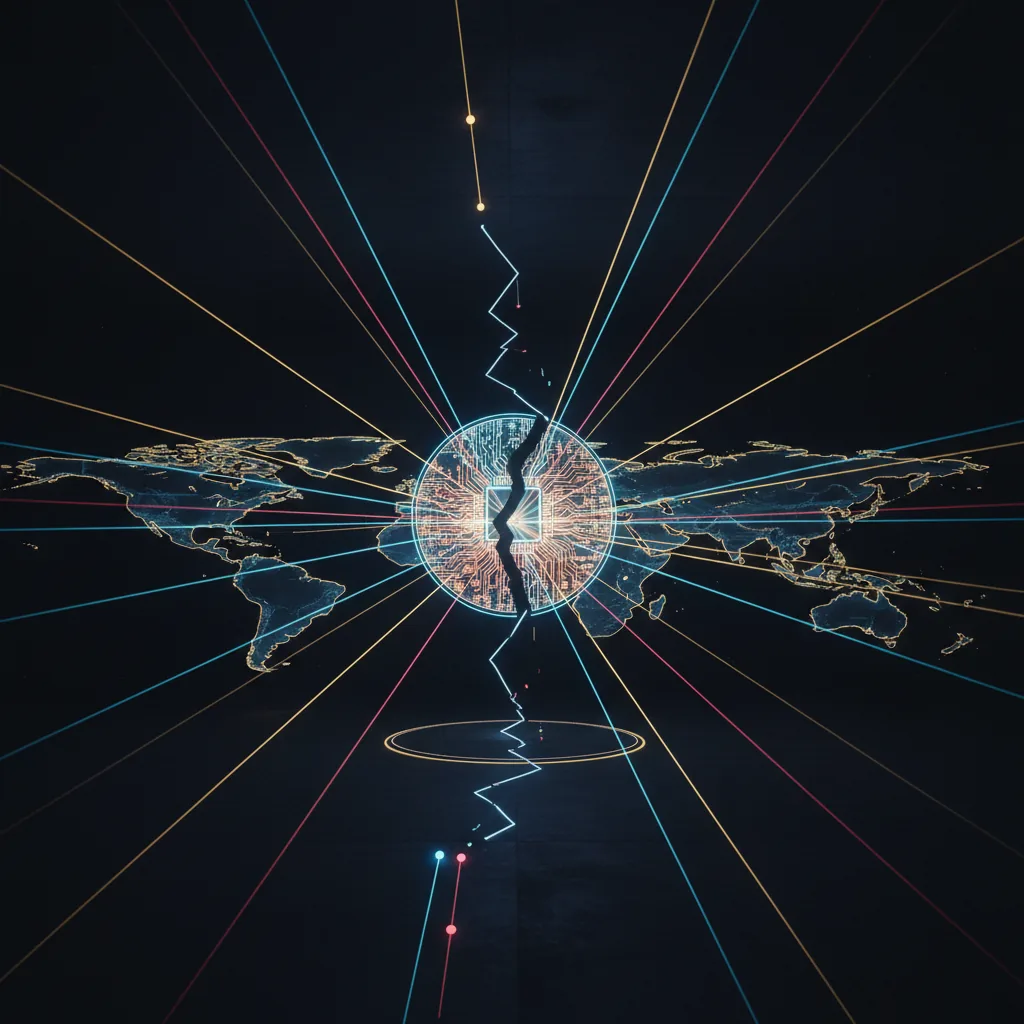
The U.S. Commerce Department has told ASML executives it believes one of the Dutch company's extreme ultraviolet lithography machines may have ended up in China, according to Bloomberg. Commerce Secretary Howard Lutnick raised the concern in recent meetings, citing evidence of EUV-related components and transport equipment shipped to China. ASML says no such machine exists there and never has.
ASML is the sole global supplier of EUV lithography systems, the only tools capable of printing the most advanced semiconductor patterns used in AI chips from Nvidia and Apple. The company's market capitalization has traded near $700 billion this week, driven by AI demand.
ASML's internal safeguards and commercial logic
ASML CEO Christophe Fouquet told TechCrunch in May that the company tracks every EUV machine ever shipped. Employees who can access EUV technology are walled off from those who cannot, and China-based staff sit on the wrong side of that firewall by design. Fouquet argued that reverse-engineering an EUV machine is nearly impossible because 80% of the technology came from decades of prior knowledge, and solving the EUV light generation problem took 20 years alone.
There is also a commercial disincentive. ASML expects roughly 20% of its 2026 revenue to come from already-permitted sales of older deep ultraviolet tools to China. Risking the EUV ban would put that revenue and the company's monopoly standing on the line over a single illegal sale.
- The Commerce Department has not publicly shown its evidence to Bloomberg or ASML.
- The department agreed late last year to put up to $150 million into xLight, a startup developing next-generation light-source technology that could challenge ASML's EUV monopoly.
- xLight's CEO told TechCrunch the company sees itself as a future partner to ASML, not a rival.
China tightens indium phosphide checks; US holds back on DeepSeek
Separately, China has tightened scrutiny of exports of indium phosphide, a compound essential to high-speed optical chips used in AI data centers, according to The Next Web. The move threatens to slow the infrastructure buildout for AI, as China is a dominant supplier of the metal.
Meanwhile, the U.S. almost blacklisted Chinese AI firm DeepSeek for contributing to China's military and intelligence, but the White House held back to avoid escalating tensions ahead of Trump's meeting with Chinese premier Xi Jinping, TechRadar Pro reported. The decision not to add DeepSeek to the Entity List reflects a delicate balance between export control enforcement and diplomatic relations.
What comes next: The Commerce Department has not made its evidence public, and ASML maintains its position. The allegations, combined with China's indium phosphide restrictions and the DeepSeek decision, underscore the escalating tech export control tensions between the U.S. and China. The outcome could reshape the global semiconductor supply chain and AI infrastructure development.
Fact check
-
Commerce Secretary Howard Lutnick told ASML executives he is concerned an EUV machine may have ended up in China.
reported · source
-
ASML expects roughly 20% of its 2026 revenue from already-permitted sales to China.
reported · source
-
China has tightened scrutiny of exports of indium phosphide.
reported · source
-
The US almost blacklisted DeepSeek but held back to avoid escalating tensions.
reported · source
Source reporting (3)
- TechCrunch · The US says ASML’s top chip tool may be in China. ASML says it isn’t
- The Next Web · China tightens indium phosphide checks as AI demand climbs
- TechRadar Pro · The US almost blacklisted DeepSeek for contributing to China’s military and intelligence — but the White House held back to avoid escalating tensions


0 Comments
No comments yet
Be the first to share your thoughts on this article.