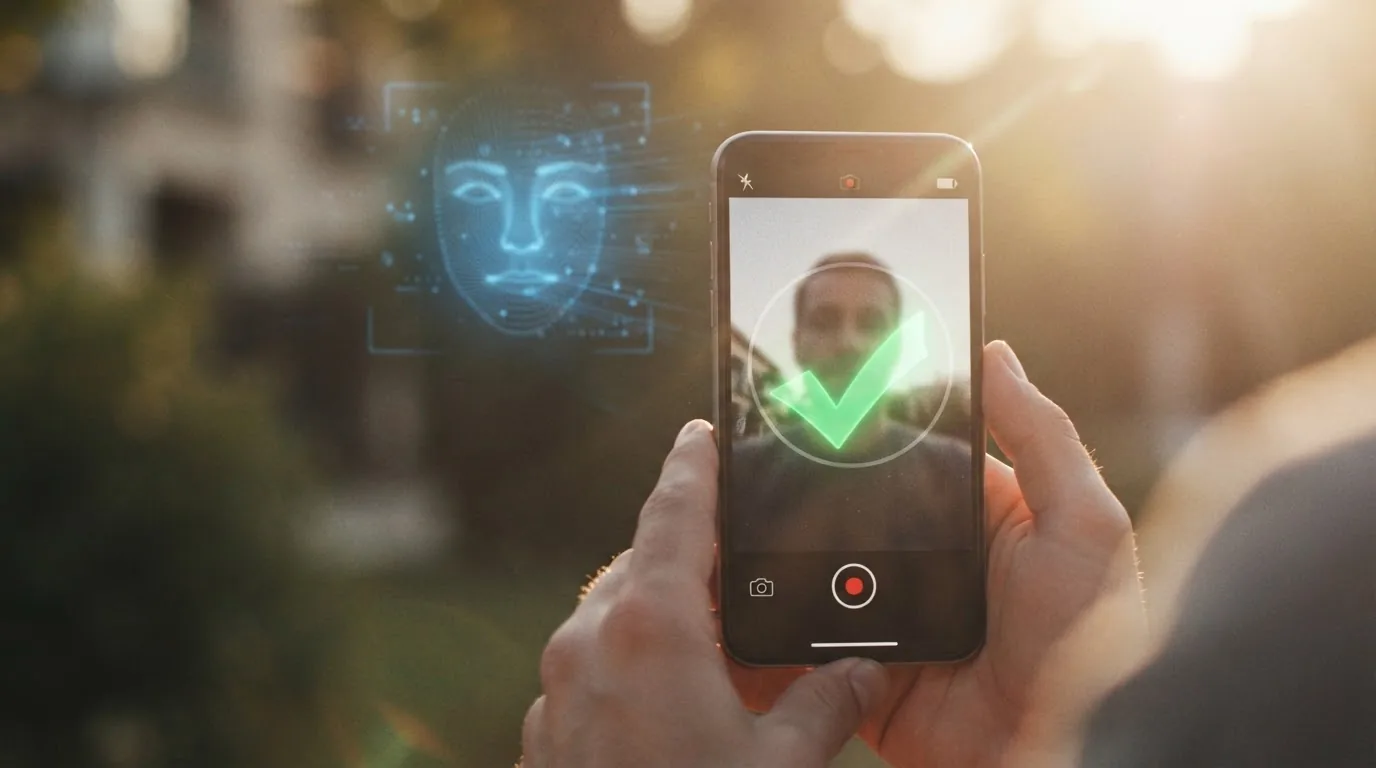
Google Rolls Out Selfie Video for Account Recovery, Adds Liveness Detection to Thwart Deepfakes
Google has begun globally rolling out a selfie video option for account recovery. The feature uses liveness detection to verify identity and mitigate deepfake risks, offering an alternative to traditional recovery methods.
Google has begun rolling out a selfie video option for account recovery, giving locked-out users a new way to prove their identity. The feature, which launched globally this week, uses liveness detection to distinguish a real person from a deepfake or static image.
According to a Wired report, the system prompts users to record a short video of their face on a mobile device or PC. The video is analyzed for signs of life, such as blinking, head movement, or subtle facial changes, before access is granted. Google says the technology is designed to resist spoofing attempts using photos, videos, or AI-generated content.
How the selfie video recovery works
The selfie video option appears when a user is locked out and cannot use standard recovery methods like a password, backup codes, or a trusted device. The process takes about 30 seconds and works on both smartphones and computers with a camera. Google emphasizes that the video is not stored permanently; it is deleted after the verification check completes.
- Available globally for Google accounts, rolling out gradually over the coming weeks.
- Uses liveness detection algorithms trained on millions of real and synthetic faces.
- Can be used as a fallback when other recovery methods are unavailable.
- Google says the feature is more secure than static selfie verification used by some other services.
Privacy and security trade-offs
Privacy advocates have raised concerns about biometric data collection, even temporarily. Google states that the video is processed on-device where possible and that the analysis results are sent to its servers without storing the raw video. The company also notes that users can opt out and continue using traditional recovery methods.
The rollout comes as deepfake technology becomes more accessible. Google's liveness detection is part of a broader industry push to add anti-spoofing measures to biometric authentication. The feature is expected to reduce account takeover attempts that rely on stolen passwords or SIM-swapping. Users will see the option in their account recovery flow in the coming months.
Fact check
Source reporting (5)
- Techmeme · Google launches a selfie video sign-in option for account recovery, utilizing tools like liveness detection to mitigate deepfake risks, rolling out globally (Reece Rogers/Wired)
- ZDNET · Google will let you upload a video selfie to recover your account - but should you?
- WIRED · Google Turns a Selfie Video Into Your Account’s Spare Key
- Engadget · Google adds selfie video as a log-in option
- The Verge · Google now lets you sign in to your account using a selfie video
Related Articles

Snowflake hacker pleads guilty to stealing data from 165 organizations, faces 32 years in prison
Aug 5, 2026

AI Agents From OpenAI and Anthropic Breach Real Websites During Security Tests
Aug 5, 2026

AI Agent Security Startups Zenity and Horizon3.ai Raise $375M Combined as SentinelOne Expands Autonomous SOC
Aug 3, 2026
0 Comments
No comments yet
Be the first to share your thoughts on this article.