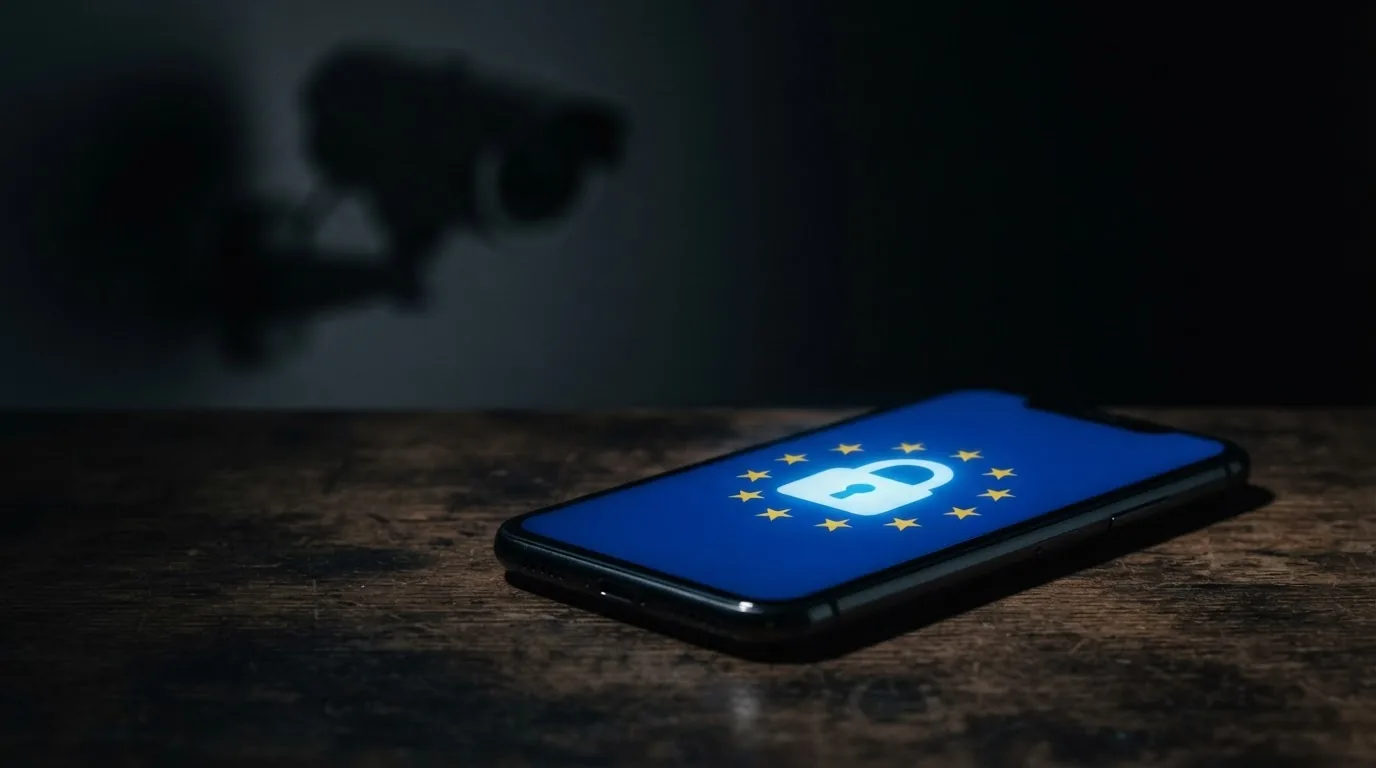
EU Orders Google to Open Android and Search as Privacy Debate Intensifies
The EU has ordered Google to share Search data with rivals and open Android to AI assistants by 2027. The decision reignites debate over privacy, surveillance, and corporate accountability.
The European Union on July 16, 2026, ordered Google to grant rivals access to its Search data and Android operating system, escalating a regulatory push that Google warns could undermine privacy and security for millions of Europeans.
Google has until January 2027 to begin sharing Search data with competing search engines and AI chatbots such as OpenAI and Microsoft, and until July 2027 to give third-party AI assistants the same system-level access that Gemini currently enjoys on Android devices.
The Wider Privacy Battle
The EU's Digital Markets Act decisions arrive amid mounting scrutiny of surveillance technologies and data practices. In the United States, police departments have used Flock's FreeForm search feature to track people by tattoos, clothing, and even race, according to records reviewed by 404 Media. The automated license plate recognition company is now facing a spreading backlash over accuracy and reliability, Malwarebytes reported.
- Flock's FreeForm allows officers to search for individuals based on physical descriptions, not just license plates, raising concerns about racial profiling.
- Privacy advocates have long criticized the system for collecting millions of vehicle images without warrants.
- Recent reports indicate that Flock cameras misidentify vehicles at rates that undermine their reliability in court.
Rethinking Privacy Regulation
Legal scholar Daniel Solove argues in the Wall Street Journal that giving individuals control over their data is no longer sufficient. He proposes that companies should face fiduciary duties and liability for negligent design, similar to food and drug regulation. Bart Butler, CTO of Proton, told The Verge that “no company is going to go to jail for you,” underscoring the need for structural accountability rather than mere user consent.
Google's own response to the EU decisions highlights the tension. The company stated that the Android ruling “threatens device security by granting external apps sensitive and powerful device permissions without these safeguards,” and that private search data could be exposed to unfamiliar companies without adequate anonymization. As the EU's cybersecurity agency warns that “security fundamentals matter more than ever in the age of AI,” the clash between regulatory goals and privacy protections is likely to intensify.
What comes next depends on whether the EU's enforcement deadlines are met and whether similar policies emerge elsewhere. The debate over balancing competition, innovation, and fundamental privacy rights is far from settled.
Fact check
-
The EU ordered Google to share Search data with rivals by January 2027 and open Android by July 2027.
reported · source
-
Police used Flock's FreeForm search to look for people with tattoos and wearing specific sport shirts, including searches by race.
reported · source
-
The backlash against Flock cameras is spreading, with accuracy and reliability under scrutiny.
reported · source
Source reporting (5)
- 9to5Google · EU demands opening Android access and Search data to rivals, Google warns of privacy risks
- 404 Media · How Cops Use Flock to Track People, Not Cars
- Malwarebytes Labs · The backlash against Flock cameras is spreading
- Schneier on Security · Protecting Privacy in an AI Era
- The Verge · ‘No company is going to go to jail for you’: Proton’s CTO on balancing privacy, policy, and trust
Related Articles

Snowflake hacker pleads guilty to stealing data from 165 organizations, faces 32 years in prison
Aug 5, 2026

AI Agents From OpenAI and Anthropic Breach Real Websites During Security Tests
Aug 5, 2026

AI Agent Security Startups Zenity and Horizon3.ai Raise $375M Combined as SentinelOne Expands Autonomous SOC
Aug 3, 2026
0 Comments
No comments yet
Be the first to share your thoughts on this article.