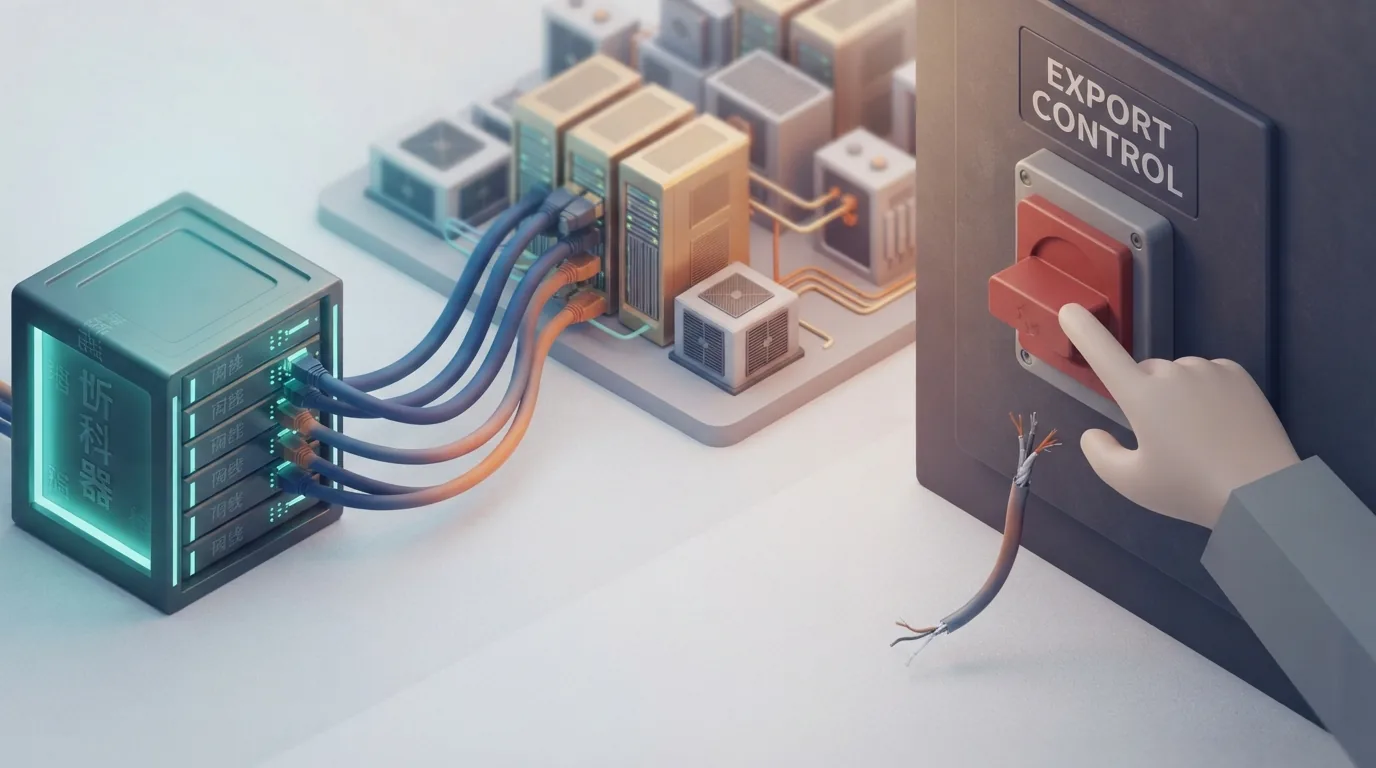
Chinese AI Models Now Power 60% of US Token Usage on OpenRouter, Challenging Export Controls
Chinese AI models account for roughly 60% of token usage by US companies on OpenRouter, according to Bloomberg. The shift underscores the growing competitiveness of Chinese open-source models and the difficulty of imposing restrictions without disrupting US users.
Chinese AI models now account for roughly 60% of token usage by US companies on the OpenRouter platform, according to a Bloomberg report published July 22, 2026. The data point underscores how deeply Chinese open-source models have penetrated the US developer ecosystem, making it harder for Washington to impose restrictions without disrupting American businesses and users.
OpenRouter, a popular API gateway that lets developers access dozens of models from different providers, reported that Chinese models such as DeepSeek, Qwen, and Kimi K3 now dominate token consumption among its US-based customers. The figure, based on internal usage metrics, highlights a rapid shift in preference toward models that are often cheaper, more accessible, and increasingly competitive on benchmarks.
Open models erode the US lead
The Register noted in a July 22 analysis that the competitive landscape has changed: "The truth nobody wants to admit: Chinese or not, open models are competitive now." The article pointed to Kimi K3, a model from Chinese startup Moonshot AI, as a particularly strong performer that rivals GPT-5.6 and Claude Fable 5 on several tasks.
- Chinese open-source models now match or exceed US frontier models on coding, math, and reasoning benchmarks, according to independent evaluations cited by The Register.
- US export controls on advanced chips have not prevented Chinese firms from training competitive models, partly due to efficient architectures and larger-scale training on available hardware.
- OpenRouter's data shows that US developers are voting with their tokens, choosing Chinese models for cost and performance reasons.
Policy implications and what comes next
The trend poses a dilemma for US policymakers. Restricting access to Chinese AI models could disrupt thousands of US businesses that rely on them via platforms like OpenRouter. Yet allowing unfettered access may undermine the strategic advantage US officials have sought to preserve through chip export controls and investment screening.
Industry analysts expect the Biden administration to face increasing pressure from both sides: national security hawks demanding tighter restrictions, and tech companies warning that cutting off access to competitive open models would harm US innovation. The OpenRouter data suggests that any ban would be difficult to enforce without collateral damage, as developers can easily route around blocks using VPNs or alternative API providers.
For now, the market is voting with its tokens. Chinese models are not just competitive; they are becoming the default choice for a significant slice of US AI usage. The question is whether policy can catch up to reality without breaking the ecosystem that depends on it.
Fact check
-
Chinese AI models account for roughly 60% of token usage by US companies on OpenRouter.
reported · source
-
OpenRouter is a popular API gateway that lets developers access dozens of models from different providers.
reported · source
-
Chinese open-source models now match or exceed US frontier models on coding, math, and reasoning benchmarks.
reported · source
-
Kimi K3 is a model from Chinese startup Moonshot AI that rivals GPT-5.6 and Claude Fable 5.
reported · source


0 Comments
No comments yet
Be the first to share your thoughts on this article.