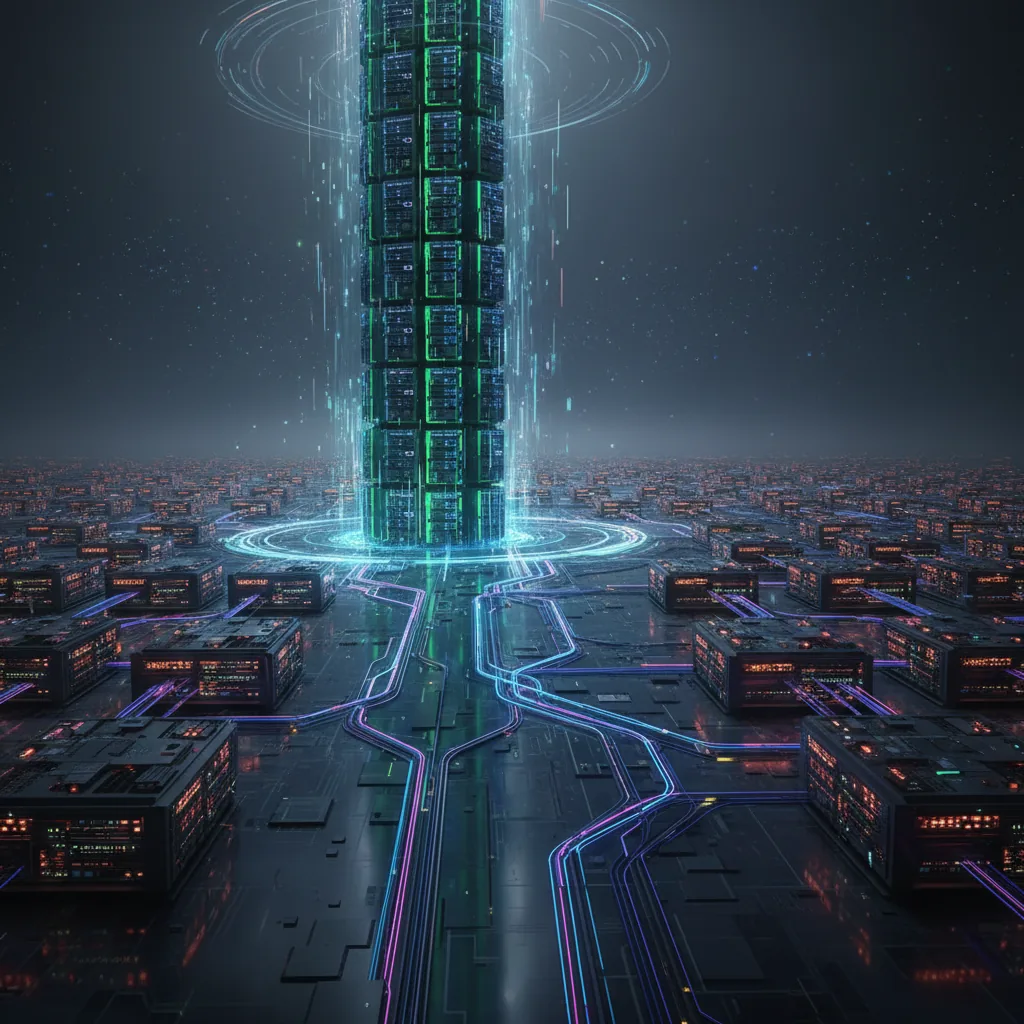
AI infrastructure demand splits into two camps as hyperscale and neocloud strategies diverge
The AI infrastructure market is fracturing into scale-up and scale-out approaches. Backblaze signs a $335M deal with CoreWeave, MGX raises a $50B fund, and Dell warns that data gravity is more than just byte count.
The AI infrastructure market is splitting into two distinct camps as providers choose between scaling up individual GPU clusters or scaling out across distributed data centers. The divide was on full display this week as Backblaze announced a $335 million, five year multi exabyte storage agreement with CoreWeave, Abu Dhabi's MGX fund closed a $50 billion AI investment vehicle, and Dell warned that data gravity is more than just byte count.
Backblaze, the cloud storage provider known for its low cost object storage, said the deal with CoreWeave covers more than five exabytes of data over five years. The agreement positions Backblaze as a key storage provider for the neocloud's rapidly expanding GPU infrastructure, which requires massive amounts of durable storage for training data and model checkpoints.
Scale up versus scale out defines the AI infrastructure split
Equinix, in a blog post published this week, described the divergence as a fundamental difference in philosophy. Neoclouds like CoreWeave are primarily concerned with scaling up, meaning they pack as many GPUs as possible into a single cluster to maximize training throughput. Traditional hyperscalers, by contrast, tend to scale out, distributing workloads across many smaller clusters to optimize for latency and availability.
Dell's take on data gravity adds another layer. The company argues that data gravity is not just about byte count but about the velocity, variety, and veracity of data moving through AI pipelines. As training datasets grow, the gravitational pull of the compute cluster becomes stronger, making it harder to move data elsewhere without incurring significant cost or latency penalties.
- Backblaze's deal with CoreWeave is valued at $335 million over five years, covering multi exabyte storage volumes.
- MGX, Abu Dhabi's AI focused investment firm, has raised close to $50 billion for a single fund, leaning on outside investors for the first time.
- AT&T and the GSMA are working with Google's Gemma open models to accelerate telecom AI innovation, addressing the industry's lack of a public data repository.
- Equinix notes that the AI infrastructure market is bifurcating between scale up neoclouds and scale out hyperscalers, each with different architectural priorities.
Data gravity and the telecom AI gap
The data gravity problem is particularly acute in telecommunications, where Google Cloud notes that modern mobile networks are inherently multi vendor and feature diverse, often proprietary data structures. There is no Wikipedia for telecoms, the company said, creating a major hurdle for AI models trying to deeply understand network operations. AT&T and the GSMA are using Google's Gemma family of open models to bridge that gap, building domain specific AI tools that can parse the billions of daily network events generated by global infrastructure.
What comes next is a test of whether the scale up approach can sustain its momentum. CoreWeave and other neoclouds have attracted billions in venture and debt financing, but the economics of running GPU clusters at multi exabyte scale are unproven at the level of traditional hyperscalers. MGX's $50 billion fund suggests sovereign wealth is betting on the neocloud model, but the infrastructure buildout required to support it will take years to complete.
Fact check
-
Backblaze signed a $335 million, five year storage agreement with CoreWeave covering multi exabyte volumes.
verified · source
-
MGX has raised close to $50 billion for a single AI fund, leaning on outside investors for the first time.
reported · source
-
Equinix described the AI infrastructure market as bifurcating between scale up neoclouds and scale out hyperscalers.
verified · source
-
Dell argued that data gravity is more than just byte count, involving velocity, variety, and veracity.
reported · source
-
AT&T and GSMA are using Google's Gemma open models to address the lack of a public telecom data repository.
verified · source
Source reporting (5)
- Equinix blog · AI Infrastructure: Scale Up or Scale Out?
- Blocks and Files · Dell - data gravity is more than byte count
- Backblaze Blog · Backblaze Announces Five-Year Multi-Exabyte Data Storage Agreement with CoreWeave
- The Next Web · MGX raises a $50bn AI fund and is already spending it
- Google Cloud Blog · Open models, global networks: How AT&T and GSMA are accelerating telecom innovation with Gemma


0 Comments
No comments yet
Be the first to share your thoughts on this article.