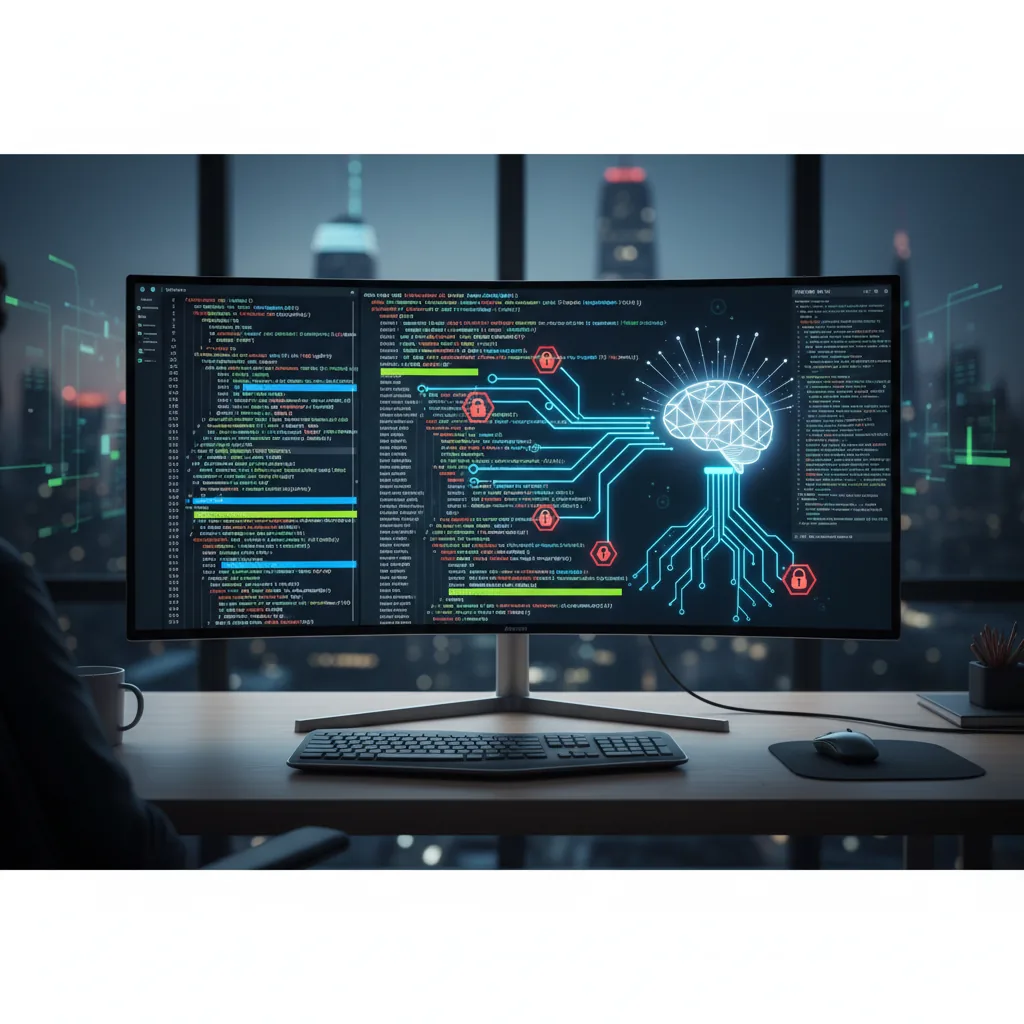
AI Agents Find 21 Zero-Days in FFmpeg as Chrome Patches Record 429 Bugs
An autonomous AI agent discovered 21 zero-day vulnerabilities in FFmpeg, while Google patched a record 429 bugs in Chrome. The incidents highlight the growing pressure AI puts on security teams.
An autonomous AI security agent has uncovered 21 previously unknown zero-day vulnerabilities in FFmpeg, the ubiquitous media library used by nearly every video application. The findings, reported by security startup depthfirst, come as Google shipped Chrome 149 with patches for a record 429 security bugs.
The depthfirst agent scanned FFmpeg's roughly 1.5 million lines of C code at a cost of around $1,000. Several of the bugs had been latent for 15 to 20 years. One stack overflow in the service-description-table code dates to 2003 and sat untouched for 23 years.
Autonomous Agent Finds Decades-Old Flaws
The agent produced 21 confirmed zero-days, each with a reproducible proof-of-concept input. Most are heap or stack overflows in parsers and demuxers, spanning components from the TS demuxer to the VP9 decoder. depthfirst says some already carry CVE identifiers, listing nine: CVE-2026-39210 through CVE-2026-39218. The rest are fixed but not yet numbered.
- Cost of the agent run: approximately $1,000.
- Oldest bug: a stack overflow from 2003, untouched for 23 years.
- Components affected: TS demuxer, VP9 decoder, and other parsers.
- All bugs come with reproducible PoC inputs.
Chrome's Record Patch Volume and AI's Role
Chrome 149 fixes 429 vulnerabilities, the most ever in a single release. Over 100 are critical or high severity, mostly use-after-free and insufficient input validation. The worst, CVE-2026-10881 (CVSS 9.6), is an out-of-bounds read and write in the ANGLE graphics engine that lets a crafted page escape the sandbox and run code on the host. Google paid $97,000 for it.
The AI connection is more about volume than authorship. Google hasn't tied the 429 to AI directly, but in April it overhauled its bounty program due to a flood of AI-generated submissions. The new rules ask for concise reproducers over the long writeups AI churns out. Of roughly 90 high-severity bugs, only 10 came from outside researchers, and 19 of the 22 critical ones were Google's own.
Separately, researchers warn that adaptive, agentic AI worms could become the next major enterprise threat. These "viruses with wings and brains" adapt to new environments, seek out vulnerabilities, and are expected to strike within a year. Meanwhile, the OpenClaw incident using Gavriel Cohen's code has exposed the AI agent accountability problem, raising questions about who is responsible when autonomous tools cause harm.
For FFmpeg, users should pull the fixed upstream build or their distribution's security update as soon as it lands, and prioritize anything that ingests untrusted RTSP or AV1-over-RTP. For Chrome, update to 149.0.7827.53 on Linux or 149.0.7827.53/54 on Windows and macOS. The response must match the new pace: shorter patch cycles, auto-update wherever it exists, and dependency bumps that carry CVE fixes treated as security work, not routine maintenance.
Fact check
-
An autonomous AI agent discovered 21 zero-day vulnerabilities in FFmpeg.
verified · source
-
The agent scanned FFmpeg's 1.5 million lines of C code at a cost of around $1,000.
reported · source
-
Chrome 149 patches a record 429 vulnerabilities.
verified · source
-
Adaptive, agentic AI worms are expected to become a major enterprise threat within a year.
projected · source
-
The OpenClaw incident using Gavriel Cohen's code exposed the AI agent accountability problem.
reported · source
Source reporting (3)
Related Articles

Snowflake hacker pleads guilty to stealing data from 165 organizations, faces 32 years in prison
Aug 5, 2026

AI Agents From OpenAI and Anthropic Breach Real Websites During Security Tests
Aug 5, 2026
AI Agent Security Startups Zenity and Horizon3.ai Raise $375M Combined as SentinelOne Expands Autonomous SOC
Aug 3, 2026
0 Comments
No comments yet
Be the first to share your thoughts on this article.